1. Introduction
In recent decades, Southeast Asia has established itself as one of the most dynamic regions in the world in terms of economic growth, international trade, and technological innovation. The Association of Southeast Asian Nations (ASEAN), composed of ten member countries, represents a market of over 670 million people and a combined Gross Domestic Product exceeding 3.9 trillion dollars (2023 data). In this context, the Philippines is emerging as a strategic platform for international companies seeking to access this expanding region.
This article aims to explore the factors that make the Philippines a privileged gateway to Southeast Asia, highlighting its geographic position, competitive advantages, priority sectors, and business environment favorable to foreign investment — with special emphasis on opportunities for Portuguese companies.
2. The Economic Potential of Southeast Asia
The ASEAN bloc has been consolidating its economic integration through initiatives such as the ASEAN Free Trade Area (AFTA) and the RCEP (Regional Comprehensive Economic Partnership), facilitating the movement of goods, services, and capital. According to the ASEAN Investment Report 2023, foreign direct investment (FDI) in the region reached 224 billion dollars in 2022, with highlights in the manufacturing, financial services, and digital economy sectors.
In addition to sustained economic growth, Southeast Asia presents a young and urban demographic profile, with a rapidly growing middle class, creating a solid base for consumption and innovation.
3. The Philippines’ Strategic Position in the Regional Context
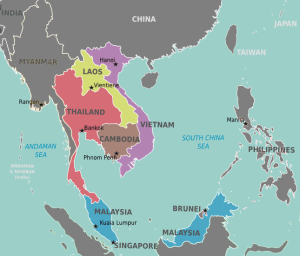
The Philippines occupies a privileged geographic position in the heart of the Asia-Pacific, with easy access to the South China Sea, the Pacific Ocean, and major economic centers in the region: China, Japan, South Korea, Indonesia, and Vietnam. This location makes the archipelago a strategic logistical link for regional and global supply chains.
Furthermore, the country is part of regional initiatives such as ASEAN and the RCEP, benefiting from multilateral trade agreements that expand preferential access to international markets.
4. The Philippines’ Competitive Advantages as a Regional Hub
4.1. Language and Human Capital
With English as one of its official languages and widely used in professional settings, the Philippines offers a favorable environment for Western companies. The country is consistently ranked among the top global destinations for outsourcing services, especially in BPO (Business Process Outsourcing), IT, and customer support.
According to data from the World Bank, higher education enrollment in the Philippines exceeds 35%, and the country graduates hundreds of thousands of skilled professionals annually.
4.2. Cost and Operational Flexibility
Cost competitiveness is an attractive factor for foreign companies. Compared to other Asian economies, labor costs in the Philippines are significantly lower, without compromising the quality of the workforce. Moreover, the country offers an extensive network of Special Economic Zones with tax and administrative incentives.
4.3. Time Zone and Connectivity
The time zone proximity to European markets (with overlapping working hours) and the good telecommunications infrastructure make the Philippines a support hub for global service operations and remote monitoring.
5. Key Sectors for Market Entry via the Philippines
The Philippine economy is diversifying and heavily investing in sectors with high growth potential and openness to foreign investment:
- Information Technology and BPO
The outsourcing industry in the Philippines is the second largest in the world, with revenues exceeding 29 billion dollars (2022), according to the Board of Investments. - Manufacturing and Logistics Industry
The manufacturing sector represents about 19% of GDP and benefits from incentives for the establishment of factories and logistics centers, especially in regions such as Calabarzon and Cebu. - Renewable Energy and Infrastructure
The country has ambitious energy transition goals, aiming for 35% of electricity to be generated from renewable sources by 2030. This scenario offers opportunities for Portuguese companies with expertise in clean energy. - Digital Commerce and Startups
With more than 85 million internet users, the Philippine digital ecosystem is rapidly expanding. The Philippine Startup Development Program provides support to tech companies and international incubators.
6. Incentives and Economic Openness Policies
The Philippines has adopted structural reforms to attract foreign investment. Key support mechanisms include:
- Special Economic Zones (PEZA, Clark Freeport, Subic Bay): Benefits such as tax exemptions, profit repatriation, and support for setting up operations.
- Foreign Investment Act (FIA): Revised in 2022 to allow 100% foreign ownership in more sectors.
- Corporate Recovery and Tax Incentives for Enterprises (CREATE): Tax reductions for businesses and sector-specific incentive packages.
More information is available on the PEZA website.
7. Success Stories and Portugal–Philippines Collaborations
Cooperation between Portugal and the Philippines has gained traction, with growing interest from Portuguese companies in exploring the Philippine market and, through it, reaching other Southeast Asian countries. Sectors such as renewable energy, education, information technology, and consulting have been promising entry points.
The Portugal–Philippines Chamber of Commerce and Industry (CCIPF) plays a key role in this process, acting as a platform for dialogue, institutional support, and a bridge between the business ecosystems of the two countries.
8. Conclusion: The Philippines as a Platform for Sustainable Growth
The strategic geographic position, favorable institutional environment, skilled labor force, and investment incentives make the Philippines a natural and effective entry point for companies seeking to operate in Southeast Asia. For Portuguese companies, this represents an opportunity for geographical diversification, commercial expansion, and entry into one of the most promising regions of the 21st century.
The CCIPF is available to support companies interested in internationalizing to the Philippine market and, from there, to the entire ASEAN region, through institutional mediation services, market studies, business missions, and strategic networking.
9. Sources and References
- ASEAN Investment Report 2023 – asean.org
- PEZA – Philippine Economic Zone Authority – peza.gov.ph
- Department of Trade and Industry, Philippines – dti.gov.ph
- World Bank Data – data.worldbank.org
- Philippine Startup Ecosystem – dict.gov.ph
- RCEP Agreement – rcepsec.org