1. Introduction
Filipino cuisine, with its impressive diversity of flavors and cultural influences, is starting to pique the curiosity of those living in Portugal. The growing Filipino community and the increasing interest in new culinary experiences have led many Portuguese to explore the exotic flavors of the Philippines.
With roots in Malay, Chinese, Spanish, and American cuisines, Filipino food is distinguished by its intense flavors, striking contrasts, and unique preparation techniques. This article presents an introduction to the rich culinary tradition of the Philippines, highlighting some of its most iconic dishes and the role of culture in spreading this cuisine in Portugal.
2. Filipino Cultural and Culinary Influence in Portugal
The growing presence of the Filipino community in Portugal has contributed to the sharing of its customs and traditions, including its cuisine. In cities such as Lisbon, Porto, and other urban areas, Filipino culture is increasingly showcased at community events, multicultural gatherings, and themed fairs, where food plays a central role.
Cultural exchanges and the Portuguese public’s openness to new experiences have been key in sparking interest in exotic ingredients, traditional dishes, and cooking techniques from the Philippines. These moments not only bring cultures closer together but also create opportunities to discover a cuisine rich in history and authenticity.
3. Typical Dishes of Filipino Cuisine
Filipino cuisine is vast and varied, offering a wide range of flavors — from bold and tangy to mild and comforting. Here are some of the most popular and representative dishes of Filipino food:
Adobo
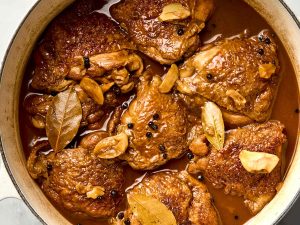
Adobo is probably the most well-known Filipino dish. It typically consists of meat (usually chicken or pork) simmered in a sauce made of vinegar, soy sauce, garlic, bay leaves, and pepper. Adobo can vary by region, but the balance of acidity and saltiness is what makes it irresistible.
Sinigang
Sinigang is a sour soup, typically made with tamarind and fresh vegetables. Pork is the most common meat used, but it can also be prepared with fish or shrimp. The tangy flavor combined with fresh ingredients creates a comforting and nutritious dish, ideal for colder days.
Lechón
Lechón, or roasted pig, is one of the most iconic dishes of the Philippines. Traditionally prepared for large celebrations, lechón is slow-roasted until the skin becomes crispy and golden. It is a showpiece dish at parties, weddings, and other special occasions.
Pancit
Pancit is a noodle-based dish that symbolizes longevity and prosperity in Filipino culture. There are several versions, such as pancit canton (similar to Chinese chow mein) and pancit malabon (made with shrimp and fish sauce).
Halo-Halo
Halo-halo is a popular dessert in the Philippines, especially during summer. It consists of a mix of crushed ice, fresh fruits, condensed milk, jelly, sweet beans, flan, and sometimes even ice cream — a true explosion of flavors and textures. It’s the perfect dessert for those looking for something both refreshing and sweet.
Lumpia
Lumpia are spring rolls filled with meat, vegetables, or shrimp. They are very popular at parties and are a typical Filipino snack. Usually served with a sweet and spicy sauce, they’re a true delicacy for celebrations.
4. Filipino Cuisine in the Portuguese Context
Although Filipino cuisine is still relatively underrepresented in Portugal’s culinary scene, its introduction has been happening organically — especially through cultural events and gatherings within the Filipino community. These occasions serve as valuable windows into a cuisine full of identity and tradition.
Moreover, with increasing globalization and access to international ingredients, it’s now possible to prepare some Filipino dishes at home. Products like Filipino soy sauce, cane vinegar, tamarind, and Asian noodles are increasingly available at Asian grocery stores in Portugal.
5. The Filipino Culinary Experience
Filipino cuisine goes beyond flavor — it is a living expression of the country’s culture. Each dish carries a story, a family tradition, or a communal celebration. Filipino hospitality, often expressed through food, values the act of sharing meals and bringing people together at the table.
Even outside the Philippines, this cultural dimension remains strong. Dishes like lechón or pancit are not just meals — they are symbols of unity and special moments. Tasting Filipino cuisine is, therefore, a way of discovering the heart of a welcoming and resilient people.
6. Conclusion
Filipino cuisine is a rich discovery of flavors, symbolism, and history. In Portugal, its recognition is slowly growing — driven by the Filipino community and a public increasingly eager to explore world cuisines.
Dishes like adobo, sinigang, pancit, and halo-halo offer a unique sensory experience that blends tradition, diversity, and creativity. Even without a solid network of dedicated restaurants, Filipino food can be enjoyed and recreated — whether at cultural events, at home, or by sharing authentic recipes.
As more people discover this vibrant cuisine, Filipino food is likely to earn a well-deserved place in Portugal’s multicultural landscape.